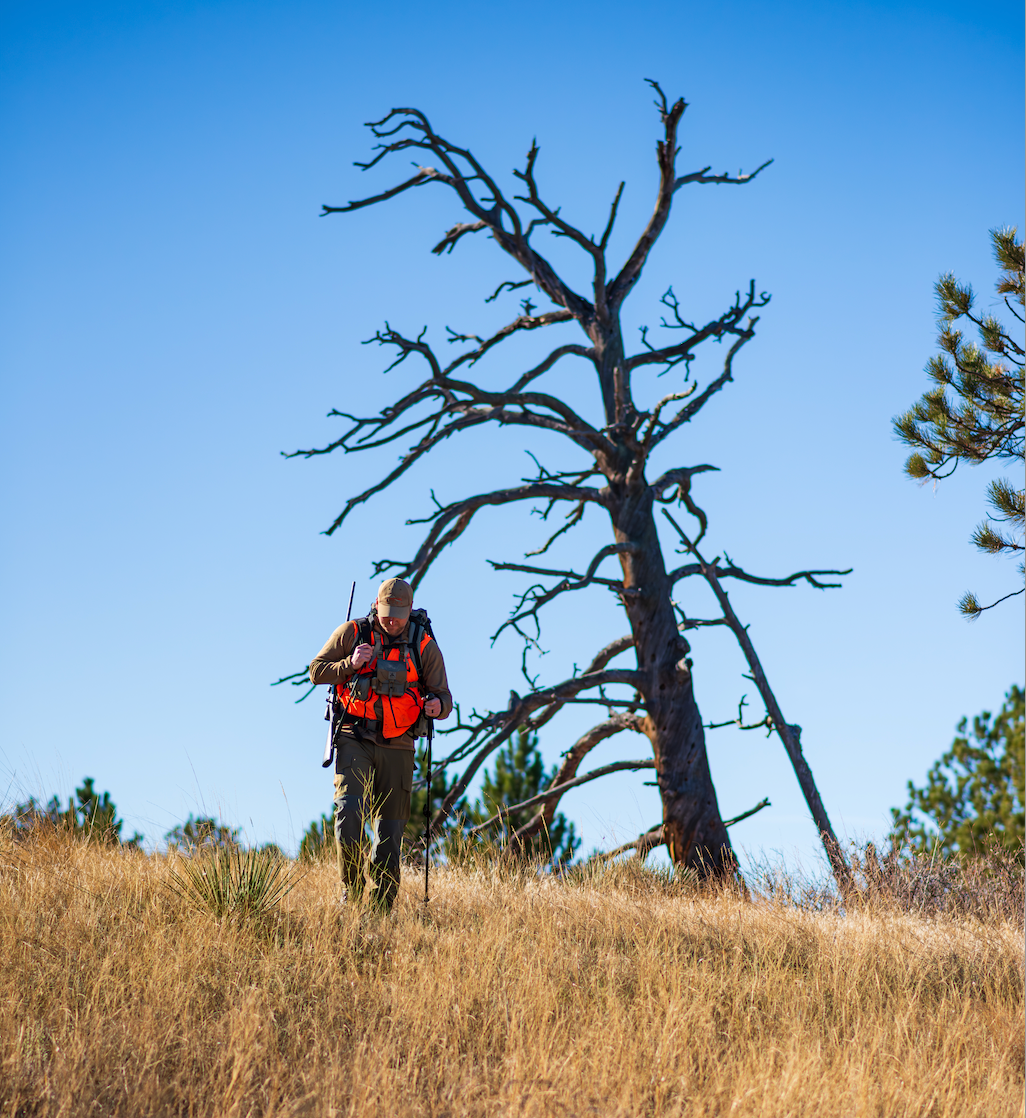
It's one of the most common questions among hunters who are new to trekking poles — and even plenty of experienced ones. Do you really need two trekking poles? Is one enough? The honest answer is: it depends on what you're doing, and for hunters specifically, there are factors that go beyond what most hiking guides will tell you.
The Case for Two Poles
From a pure performance standpoint, two poles win. The research backs it up — two trekking poles can reduce compressive force on your knee joints by 20–30% compared to hiking without poles, and that benefit drops off meaningfully when you go down to one. Going uphill, two poles let both arms share the load and drive you forward. Going downhill — where your knees take the hardest beating — two poles absorb shock on both sides of your body instead of one, which also keeps you from loading one side unevenly on long descents.
Two poles also give you the most stability on the kind of terrain backcountry hunters deal with constantly: steep sidehills, loose rock, creek crossings, and uneven ground covered in deadfall. If you're packing out a heavy load of meat at the end of a successful hunt, two poles aren't optional — they're the right call.
The Case for One Pole
Here's where hunting diverges from hiking: you often need a free hand. Glassing on the move, working a game call, pushing through brush, or keeping a hand free for a quick shooting opportunity — there are plenty of moments in the field where two poles in your hands actually get in the way.
One pole still gives you real benefits. You get meaningful stability and balance assistance, solid uphill drive, and significant knee relief on descents — just not to the full degree that two poles provide. For shorter approaches, lower-angle terrain, or technical stalks where you need freedom of movement, one pole is often the more practical choice.
Weight is also a factor for ultralight hunters trimming every ounce. One pole is, simply, half the weight.
The Hunting-Specific Answer
Most experienced backcountry hunters land on the same approach: two poles for the approach, one pole (or poles collapsed and stowed) for the stalk. Run two poles while you're covering miles under a heavy pack — that's when your joints and endurance need the most help. When you close the distance on an animal and need your hands free and your movement quiet and deliberate, collapse one or stow it and work with a single pole or none.
Winter hunts and heavy pack-out situations are two poles, no question. Early season spot-and-stalk in open country where you're glassing and moving quickly — one pole often makes more sense.
Where the RoadRunner Changes the Equation
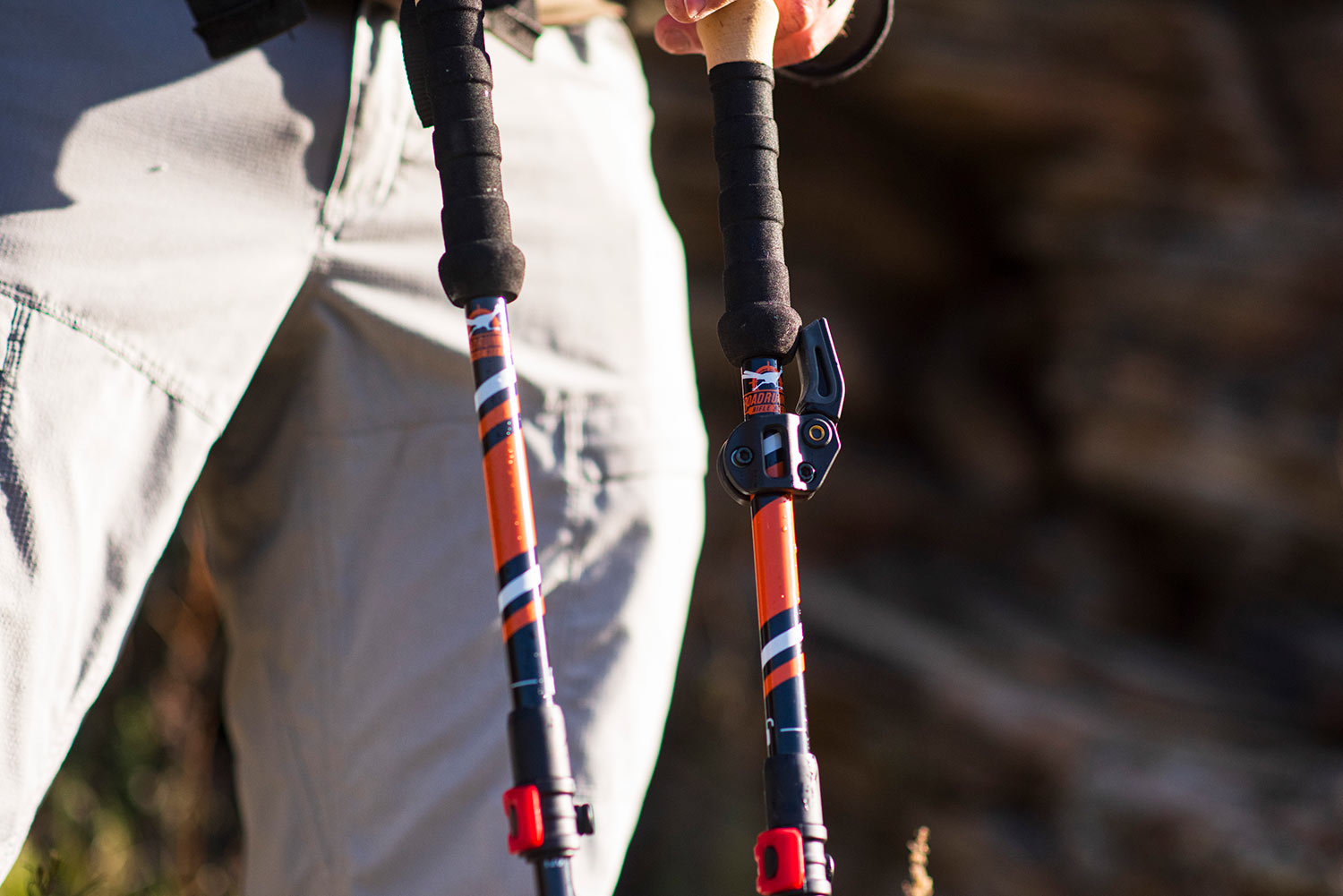
If you're running a RoadRunner Rifle Rest, there's an added consideration: your shooting rest is mounted to whichever pole you designate for it. That pole becomes your primary shooting platform, so it makes sense to keep it in hand consistently — which many hunters find naturally guides them toward a one-pole setup during active hunting, with the second pole stowed or left at camp.
The RoadRunner's one-ounce weight means there's no reason to take it off between setups. Whether you're running one pole or two, it's always ready.
What It All Means
Two poles are the performance choice for long miles and heavy loads. One pole wins when you need a free hand, minimal profile, or maximum mobility during a stalk. Most backcountry hunters end up using both — two on the way in, one when things get real. Start with two and adjust from there based on how you hunt.